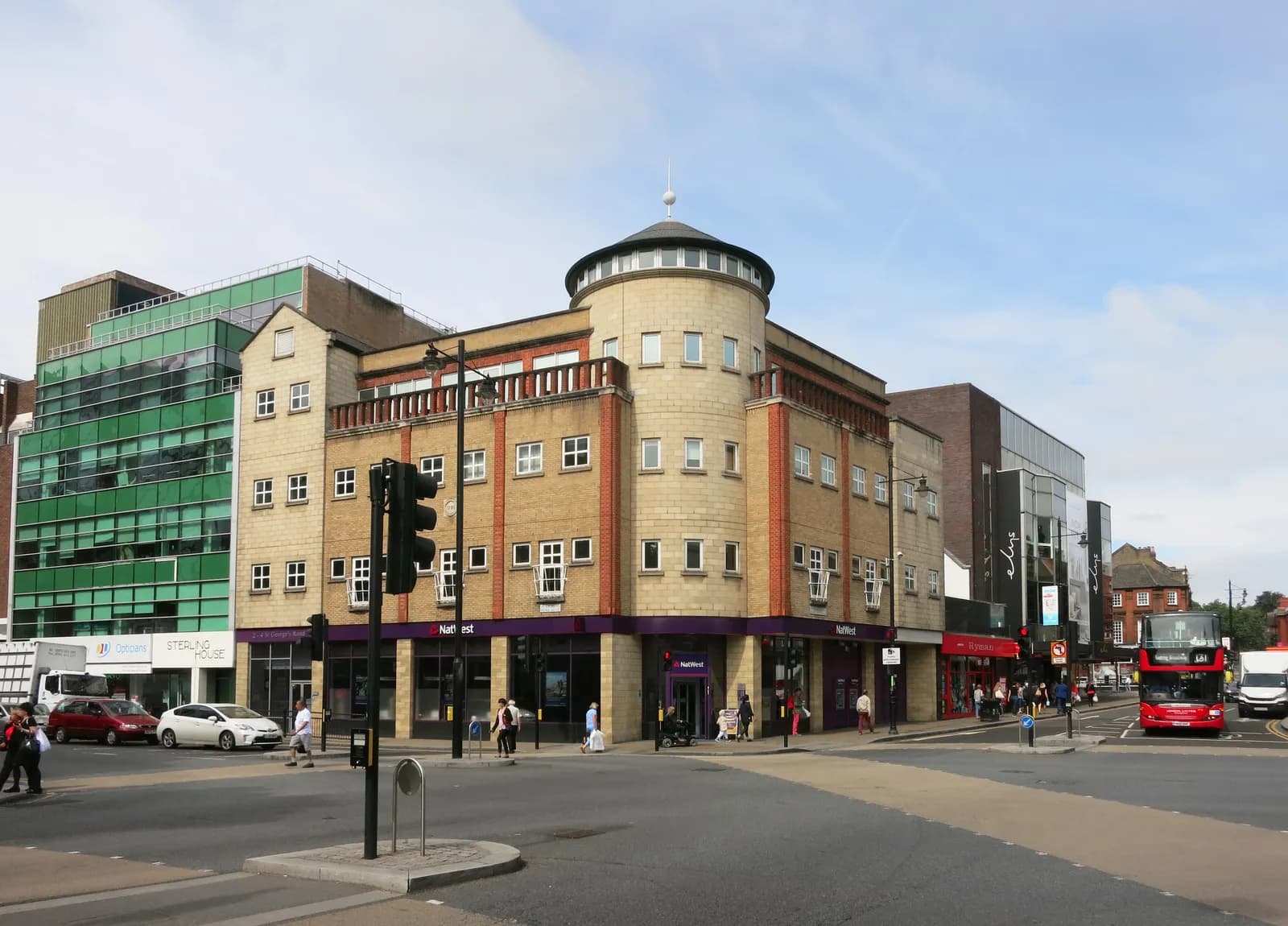
Merton Magazine arrives at a pivotal moment for one of London's most characterful boroughs. With a population of approximately 218,500 residents spread across 14.5 square miles, this corner of south-west London encompasses everything from world-famous tennis courts to the largest mosque in Western Europe, from Victorian garden suburbs to sprawling commons that have served the community for centuries.
Three Towns, One Borough
The London Borough of Merton came into existence on 1 April 1965, created under the London Government Act 1963 from the former Municipal Borough of Mitcham, the Municipal Borough of Wimbledon, and the Merton and Morden Urban District. The name "Merton" itself represents a diplomatic compromise between the area's two largest settlements, borrowing from the historic parish that predated both.
Today, the borough retains the distinct identities of its three principal towns. Wimbledon, with a population of roughly 68,000, serves as the commercial and transport hub, sitting just seven miles south-west of Charing Cross. Mitcham, home to approximately 63,000 people, occupies the northern reaches of the borough and carries the architectural and industrial legacy of its rural past. Morden, with 48,000 residents, marks the southern boundary and functions as the administrative centre, housing the Civic Centre on London Road.
From Lavender Fields to Global Stages
Merton's history reveals a remarkable transformation. The Domesday Book of 1086 recorded Mitcham as "Michelham" with an estimated population of 250, and Morden as "Mordone" with just 14 inhabitants. By the eighteenth and nineteenth centuries, Mitcham had become synonymous with lavender cultivation, its fields supplying perfume distillers and apothecaries across London. The Potter & Moore company, founded in 1749, built an empire on Mitcham lavender that endured for generations.
The area's industrial heritage extends beyond agriculture. William Morris and Liberty & Co operated dyeworks at Merton Abbey Mills along the River Wandle, producing textiles that defined the Arts and Crafts movement. The Surrey Iron Railway, opened in 1803, passed through Colliers Wood and Mitcham as the world's first public railway, presaging the transport revolution that would eventually connect Merton to the capital.
That connection reached its modern expression in 1877, when the All England Lawn Tennis and Croquet Club held its first championships on the fringes of Wimbledon Common. The tournament has grown into one of sport's four Grand Slam events, attracting over 200,000 visitors during its annual fortnight and beaming images of Wimbledon's manicured courts to hundreds of millions of viewers worldwide.
A Borough of Contrasts
Merton's demographic makeup reflects the complexity of contemporary London. The 2021 census recorded a population of 215,187, with 60.2 per cent identifying as White and 39.8 per cent belonging to ethnic minority groups. Wimbledon wards reported White British populations of approximately 60 to 65 per cent, while areas such as Colliers Wood recorded 38.5 per cent.
The borough's religious landscape has shifted dramatically in recent decades. The Baitul Futuh Mosque, completed in Morden in 2003 at a cost of £5.5 million, accommodates up to 10,000 worshippers and stands as the largest mosque in Western Europe. This sits alongside St Lawrence Church in Morden, a Grade I listed building dating from the 1630s, and the numerous Victorian and Edwardian churches that punctuate the suburban streetscape.
Green Spaces and Sporting Heritage
Despite its urban location, Merton retains exceptional access to green space. Wimbledon Common ranks among London's largest commons and contains the remains of an Iron Age hill fort. Mitcham Common spans 460 acres of woodland, grassland, and wetlands. Morden Hall Park, a 120-acre National Trust property on the River Wandle, features a rose garden with 2,000 specimens and the preserved snuff mills that once drove the local economy.
The borough's sporting credentials extend well beyond tennis. Mitcham Cricket Green claims status as the world's oldest cricket ground in continuous use, with the Mitcham Cricket Club representing the world's oldest cricket club. AFC Wimbledon, formed in 2002 by supporters after the original Wimbledon FC relocated to Milton Keynes, opened its new Plough Lane stadium in 2020 and currently competes in League Two. Non-league clubs including Colliers Wood United, Raynes Park Vale, and Tooting & Mitcham United maintain deep roots in their respective communities.
Transport and Connectivity
Merton holds the distinction of being the only London borough served by tube, rail, and tram. The Northern Line terminates at Morden, with stations at Colliers Wood, South Wimbledon, and Wimbledon Park providing connections to central London. National Rail services operate from Wimbledon, Raynes Park, Mitcham Junction, and several smaller stations. The Tramlink, serving Wimbledon, Merton Park, Morden Road, and Mitcham, offers connections to Croydon and Beckenham.
This transport infrastructure has shaped the borough's development since the railway arrived at Wimbledon in 1838 and the Northern Line reached Morden in 1926. The pattern holds today: according to the 2011 census, 19.2 per cent of residents drove to work, while 26 per cent used underground, metro, tram, or train services.
Local Governance and Community Life
Merton London Borough Council, currently controlled by a Labour majority that has held since 2014, oversees services ranging from education to waste collection, housing to planning. The council's 57 members represent 20 wards across the borough, with the political map showing significant Liberal Democrat strength and Conservative representation concentrated in particular areas. The Merton Park Ward Residents Association holds two seats, reflecting the enduring tradition of independent local politics in certain neighbourhoods.
The council has styled itself as the "Borough of Sport," promoting physical activity and athletic facilities across Merton. The Merton Youth Parliament provides a formal voice for residents aged 11 to 19, or up to 25 for those with disabilities, ensuring that younger perspectives inform local decision-making.
What Merton Magazine Offers
This publication exists to document, investigate, and celebrate the borough we serve. Merton Magazine will cover planning decisions that affect local neighbourhoods, profile the businesses operating on our high streets, and examine the policies shaping education, health, and transport. We will report on cultural events at the New Wimbledon Theatre and the Polka Children's Theatre, cover matches at Plough Lane and the cricket green, and track the changing seasons in Morden Hall Park and Wimbledon Common.
The magazine will also hold local institutions to account. When the council makes decisions about housing developments, when transport operators alter services, when health trusts reconfigure provision, we will ask the necessary questions and report the answers without fear or favour.
Merton deserves journalism rooted in its specific geography, history, and communities. This magazine aims to provide exactly that: coverage that recognises Wimbledon, Mitcham, and Morden as distinct places with shared governance; that understands the River Wandle as both industrial heritage and ecological corridor; that treats the borough's diversity not as an abstraction but as the lived reality of neighbours, colleagues, and fellow residents.
We begin this work with the motto that appears on the borough's coat of arms: "Stand Fast in Honour and Strength." For Merton Magazine, that means standing fast for accurate reporting, for fair representation of all the borough's communities, and for the strength that comes from genuine local knowledge.
Welcome to the first issue.